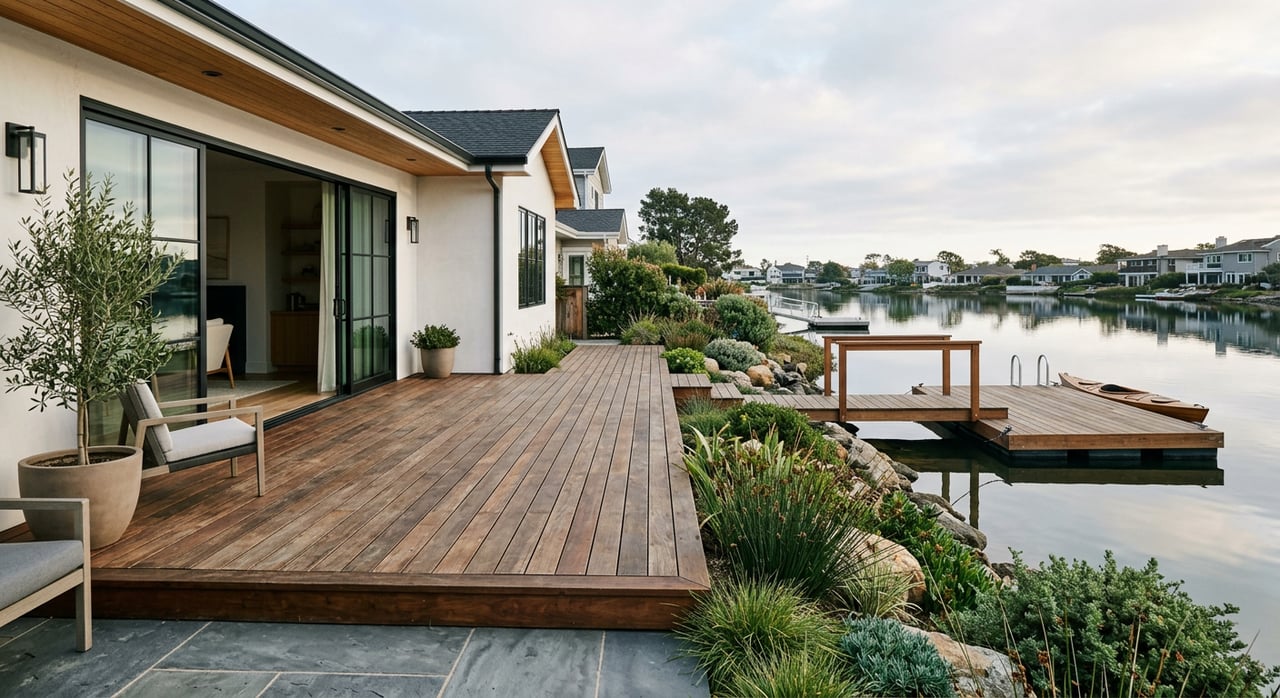
Picture your morning coffee on a quiet dock, kayaks gliding by and the Bay Trail just outside your door. If you are considering a waterfront home in Foster City, you probably want the lifestyle and the view, and you also want clarity on docks, rules and flood insurance. In this guide, you will learn how waterfront living works here, what to verify before you buy, and the steps that help you enjoy the lagoon with confidence. Let’s dive in.
Why Foster City waterfronts stand out
Foster City was designed around lagoons, parks and trails, so water access is part of everyday life. The city’s neighborhood plan shows a mix of single family homes, townhomes and condos, many sited along calm lagoon channels with water views and yard access to the shoreline. You can see this planned mix in the city’s neighborhood snapshot and general plan materials.
The levee and Bay Trail wrap the city’s edge and connect parks, which adds a daily benefit for walkers, runners and cyclists. Recent work through the Levee Improvements Project rebuilt sections of the trail while upgrading flood protection, so you enjoy recreation alongside resilience.
Review the neighborhood snapshot and the Levee Improvements Project overview for context.
What “waterfront” means here
In Foster City, waterfront usually means one of two things. First, a home that backs to a lagoon channel, often with a yard that meets the water’s edge. Second, a property that has legal dock or boat access, which may be private, shared or managed by a homeowners association.
Not every yard that touches the water includes a permitted, transferrable dock right. The city regulates docks with specific design and permitting standards. Before you assume moorage or slip rights, verify recorded easements, HOA or CC&R language, and any city permits tied to the property.
You can read the city’s dock standards in the Planning Commission’s Boat Dock policy.
Everyday water access and fun
You do not need a private dock to enjoy the water. Public launch sites at Foster City Boat Park and Leo J. Ryan Memorial Park are popular put ins for kayaks, canoes and stand up paddleboards. The city also supports concession operations at Leo J. Ryan Park, and private operators run electric boat rentals under city rules.
On the water, you will find clear navigation expectations. Rental and operator materials call out a slow 5 mph no wake guideline, yielding to non motorized users and keeping motorized craft to main channels while avoiding narrow side channels and low bridges. Dumping trash or discharging waste into the lagoon is prohibited.
To plan an outing or understand typical rules, check the San Mateo County boating facilities list, the city’s boat rental concession materials, and the Edgewater Marine rental agreement.
Dock rules and permits
Are private docks allowed?
Yes. Private residential docks are allowed in Foster City, subject to Architectural Review and detailed design criteria. The city favors floating docks and has phased out pile supported docks over time. You must obtain permits before building a new dock or making major repairs.
See the city’s full criteria in the Boat Dock policy.
Key size and siting limits
- On wide waterways, the parallel dock length is generally limited to about 20 feet and the perpendicular width is typically 10 to 12 feet.
- On narrow waterways, lengths are smaller, often around 16 feet with narrower widths.
- No private dock may reduce the unobstructed channel to less than 45 feet.
- Docks must be floating, independently anchored and set off the lagoon wall. Metal tanks and wood flotation tanks are not allowed.
All of the above are permit level checks during Architectural Review.
Renovations and dredging
If your repair or renovation replaces or changes 50 percent or more of a dock’s structure or value, you will trigger a full permit review. If you want deeper water adjacent to your property, dredging is not automatic. Written permission from Public Works is required for any dredging.
Standard use conditions
Approvals commonly include conditions such as no overnight docking, no live aboards and dock use limited to boating equipment. Docks may not encroach into publicly owned water.
HOAs and shared docks
In some planned neighborhoods, docks or launches are owned by an HOA and used as common amenities. In others, docks are private. That means recorded CC&Rs, easements and HOA rules control who may use a dock and who pays for maintenance or dredging. Always request the full HOA document set and any slip assignment rules during due diligence.
When other agencies are involved
If your project touches the shoreline, levee or lagoon, you may need permits beyond the city. Regional and federal agencies, such as the San Francisco Bay Conservation and Development Commission or the Army Corps of Engineers, can have jurisdiction. Start early if you plan any work into the water. You can explore current and past shoreline permits through BCDC’s permit application tracker.
Flood risk and insurance
Flood risk is central to waterfront ownership. Foster City funded and built a large Levee Improvements Project intended to maintain FEMA accreditation and provide protection against projected mid century sea level rise. The project also improved the levee trail as a community amenity.
Even with an accredited levee, flood and insurance questions are parcel specific. You should confirm the exact FEMA flood zone for your address, whether the city’s accreditation applies to your parcel, and whether your lender will require flood insurance for your loan program. If available, ask for a recent elevation certificate and review any Measure P bond assessments on the tax bill.
For background and current status, review the Levee Improvements Project page and the levee program’s about page. The city’s Climate Action Plan identifies broad sea level rise vulnerability, which is why property level verification still matters.
You can also see how staff discuss FEMA mapping and levee benefits in a city staff report on flood mapping and review vulnerability framing in the 2024 Climate Action Plan update.
Water quality and wildlife
Foster City treats its lagoons and shoreline as shared environmental assets. City concession and operator materials prohibit discharging waste or dumping garbage in the water, and they promote safe, low impact boating. The shoreline and wetlands are part of the Bay’s ecological system, which the city highlights in its climate planning.
If you value wildlife viewing and a quieter on water experience, the lagoon setting delivers that. If you prioritize high speed motor craft, plan around the no wake expectations and habitat sensitivity.
Explore operational details in the boat rental concession guidelines and habitat context in the Climate Action Plan.
Buyer checklist for waterfront due diligence
Use this list to go from dream to done with fewer surprises.
Permits and rights
- Request copies of any dock permits, including Architectural Review and building permits.
- Ask for recorded easements, slip leases and HOA or CC&R rules that govern dock use or shared facilities.
- If deeper water was needed for docking, request any written dredging approvals or denials from Public Works.
Flood and insurance
- Confirm the property’s current FEMA flood zone and whether the levee accreditation applies to the parcel.
- Ask for elevation certificates and any flood insurance history or claims, then consult your lender and insurance agent on requirements.
- Check your tax bill for Measure P assessments related to levee funding.
City and agency confirmations
- Call Foster City Planning to confirm the dock’s permit status and whether it was grandfathered or fully permitted.
- If you plan new work into the water, ask early about additional permits that may be needed from regional or federal agencies.
On the ground inspections
- Inspect the bulkhead or seawall, plus the dock’s flotation, anchoring and clearance from the lagoon wall. Condition affects safety and replacement scope.
- Confirm usable depth for your intended craft and note where side channels are off limits for transit.
When you are ready to compare options, prep a listing or structure a winning offer, you will want a local advocate who understands how waterfront details affect value and timing. For hands on guidance and a smooth, well marketed experience, work with Debbie Elowson.
FAQs
Can you build a private dock in Foster City?
- Generally yes, but you must secure Architectural Review approval and meet the city’s size, materials and anchoring standards, and you should confirm any dredging permission with Public Works.
Where can you launch kayaks and SUPs if you do not have a dock?
- Boat Park on Bounty Drive and Leo J. Ryan Memorial Park are commonly used public launch points for non motorized craft.
What are the typical boating rules on the lagoon?
- Expect a slow 5 mph no wake guideline, yielding to kayaks and SUPs, staying in main channels for motorized boats and avoiding narrow side channels and low bridges.
Do waterfront homes in Foster City require flood insurance?
- It depends on your specific FEMA flood zone and lender requirements, and while the levee is built to maintain accreditation, you should verify the current map and policy for your exact address.
Who maintains shared docks or slips in some neighborhoods?
- Maintenance and access are usually governed by your HOA and recorded CC&Rs, which define who can use the dock and how costs are allocated.